

Government and defense
SKOPIA skoh-pee-uh
Sensor-agnostic Knowledge Of Position, Intent and Activity
Preview the SKOPIA data sheet

FROM GEOSYNCHRONOUS ORBIT TO THE MOON
Cislunar space domain and situational awareness for cooperative and non-cooperative objects, as a software service.
Where we work
Kynthos is developing software that tasks commercial and partner sensors to hold custody of objects from extra-geosynchronous orbit (xGEO) to the Moon, each inside a stated uncertainty bound.
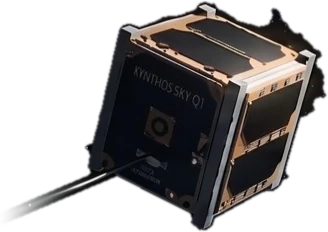
At the start Kynthos flies no sensors of its own: it buys or rents time on ground-based optical and radar sensors and on partner sensors in orbit, and decides where each should look next. For finer and more continuous custody, and for custody out of ground contact, it plans to fly its own constellation of optical observers.
Whichever sensors feed it, the product is a software console under a term license: SKOPIA, LUNEA and CERTIA, one for each kind of customer.
Products
One product for each kind of customer. Preview the preliminary data sheet for your sector.
Government and defense
Sensor-agnostic Knowledge Of Position, Intent and Activity
Preview the SKOPIA data sheetLaunch providers and lunar operators
LUNar Encounters and Avoidance
Preview the LUNEA data sheetSpace insurance
Custody Evidence, Risk, Term, Insurance and Attestation
Preview the CERTIA data sheetAdaptive multi-sensor custody tracking in cislunar regimes
Autonomous federated custody of resident space objects in denied environments
Custody when objects are out of ground contact; in development.
News
Nations and companies are returning to the Moon to stay. A 59-second film on the space between Earth and the Moon, and why someone must watch over it.
Kynthos, Inc. joins the first cohort of STAGE, the 12-week accelerator Space Northwest developed with the Commercial Space Federation. The cohort is introduced at the Space Northwest Symposium on 29 September 2026.
Careers
Three leadership roles are open: VP of Engineering, VP of Policy and Strategic Partnerships, and Chief Scientist. Other profiles that would add capability are welcome too.